



















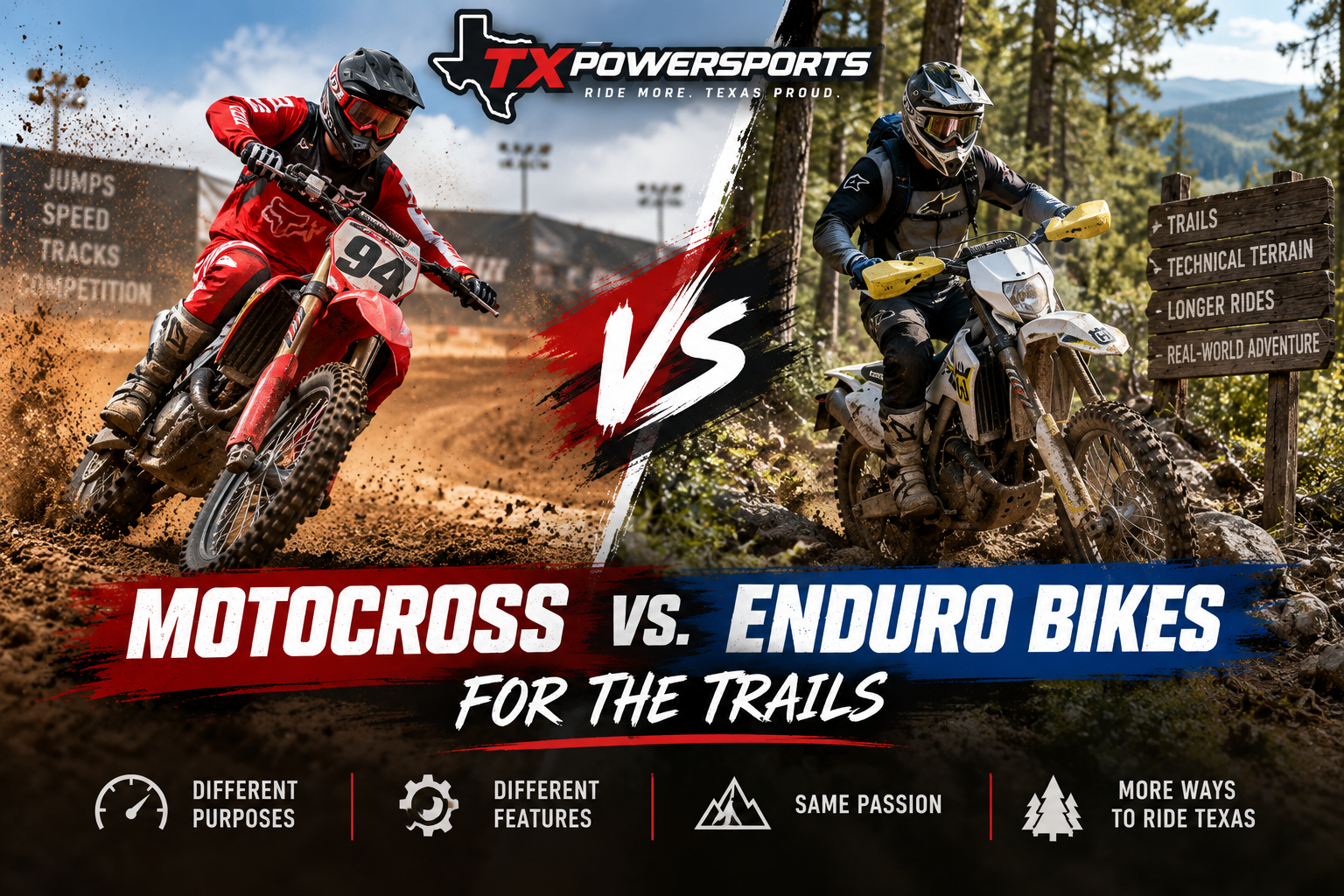
A motocross bike looks like it should have no trouble tearing through a trail. It has long suspension, aggressive tires, plenty of power, and an unmistakable race-bike stance. But put one on a rocky woods trail, and you may start wishing you had brought something else. The problem isn’t that an MX bike can’t handle the terrain.
It can.
The problem is that almost everything about the bike was designed around a motocross track. The suspension is firm, which is great when you’re landing a jump but not always so pleasant when you’re riding over a mile of roots and rocks. The gearing can also feel awkward when the trail slows to a crawl.
Ride like that for a few hours, and the bike can leave you more beat up than you expected. For most weekend riders, an enduro or trail bike is the easier choice. It’s better suited to changing speeds, rough ground, technical sections, and longer rides. If trails are where you spend most of your time, that matters a lot more than how aggressive the bike looks sitting in your garage.
Motocross vs. Enduro: Two Bikes, Two Jobs
MX and enduro bikes share plenty of visual cues. Both have knobby tires, long-travel suspension, high ground clearance, and the kind of narrow, lightweight shape you expect from an off-road motorcycle. But they’re built around very different kinds of riding.
A motocross bike is designed for a closed-course race track. The suspension and chassis are tuned for jumps, berms, whoops, ruts, and fast cornering. The bike needs to stay planted when the rider is charging hard and coming down from a big jump.
An enduro bike is designed for natural, unpredictable terrain. A trail doesn’t care what you planned to ride. One minute you may be working your way through rocks and roots, and a few minutes later you might be climbing a hill, crossing mud, or opening the throttle on a faster section. Since the pace changes constantly, the best line isn’t always obvious.
You truly notice the difference once you take the bike off the track and into the woods.
Why an MX Bike Can Feel Harsh in the Woods
There’s a good reason motocross suspension is stiff. A race bike has to absorb big jumps, hard landings, and aggressive hits without diving through its suspension travel. A firm setup gives a motocross rider the support needed to attack the track at speed. A trail throws something else at the bike: lots of little hits, one after another.
Roots, rocks, ruts, holes, washouts, and uneven ground can keep the suspension working almost constantly. Instead of one big landing followed by a smooth section of track, you might spend an entire stretch of trail picking your way over rough ground.
An MX bike can take it, but that doesn’t mean it will feel good doing it. A stiff race setup can make smaller bumps feel sharper, and you may find yourself using more effort just to keep the bike settled. That’s easy enough to tolerate on a short ride. Spend half a day in the woods, and you’ll notice it.
So, can an MX bike ride trails? Absolutely.
The more useful question is whether it was built with that kind of riding in mind. That’s where an enduro bike starts to pull ahead.
What Makes an Enduro Bike Better for Trail Riding?
An enduro bike isn’t simply an MX bike with softer suspension. The whole package is aimed at dealing with terrain that changes constantly.
Suspension That Can Deal With Rough Ground
Trail suspension needs to do more than survive big impacts. It has to stay busy with all the smaller stuff, too. A trail-oriented setup can be more forgiving over roots, rocks, and broken ground while still giving you enough support when the trail gets difficult. That makes a difference over a long ride.
When the bike is working with the terrain instead of kicking you around, you can relax a little. You’re less likely to tense up, you can spend more attention looking ahead, and choosing a line becomes easier. That may not sound like a major advantage on paper. After a few hours on the bike, it usually feels like one.
Gearing That Handles Slow and Fast Sections
A motocross track generally keeps you moving within a fairly predictable range of speeds. A trail doesn’t. You might be crawling up a rocky hill one minute, feathering the clutch through a tight section the next, then find yourself on an open dirt road where you can finally let the bike stretch its legs.
That’s where a wider-ratio transmission earns its keep. Lower gears give you better control when the trail gets slow and technical. Taller gears are more useful when the trail opens up. You don’t really appreciate the difference until you’re stuck wishing for either a lower gear or another gear on a long ride.
Equipment That Makes Sense Off the Track
A motocross bike doesn’t need much beyond the equipment that helps it perform on a race course. A trail bike has more practical concerns. Take headlights. They don’t do much for a rider sitting behind the starting gate, but they can be handy if a trail ride takes longer than planned.
Street-legal enduro and dual-sport motorcycles go further, with equipment such as headlights, mirrors, turn signals, and other road-legal hardware. Exactly what’s required depends on local laws and registration rules. That distinction matters if you plan to connect trails using public roads.
Don’t assume a bike is street legal just because a listing calls it an enduro, dual-sport, or “street-legal dirt bike.” Check the manufacturer’s specifications and the registration and equipment requirements in your state before you buy. If you want one motorcycle that can handle both dirt and public roads, a properly certified dual-sport or enduro is a much more practical starting point than a pure motocross bike.
What About Noise?
Noise usually isn’t the first thing people think about when they’re shopping for a dirt bike. At a motocross track, it’s part of the setting. Competition bikes are built to perform on the track, and engine and exhaust noise come with the territory.
A long trail ride is different. If you’re spending hours in the woods, a bike with a less aggressive character may simply be more pleasant to live with. Some trail systems also have their own sound limits, so check the local rules before you head out.
This isn’t a blanket claim that every MX bike is louder than every enduro bike. The bigger point is that the two categories are built around different priorities.
Can You Ride an Enduro Bike on a Motocross Track?
Sure. For occasional track days and casual riding, an enduro bike can handle a motocross track just fine. You can ride the berms, corners, jumps, and whoops. Where things start to change is when you begin riding the track hard.
Repeated jumps and heavy landings put a lot of stress on the suspension. A trail-oriented bike isn’t designed for repeated race-speed impacts in the same way an MX bike is. If you’re lining up to race motocross every weekend, buy the bike that’s meant for that job: an MX bike.
If most of your riding happens on trails, there’s little reason to accept all the compromises of a race bike just because you occasionally want to ride a track. An enduro bike lets you have some fun at the track while staying better suited to the miles you’ll actually ride.
You Might Also Want to Check Our Selection Of: 125cc Dirt Bike
Can You Ride a Motocross Bike on Trails?
Yes. Plenty of riders do. An experienced rider can take an MX bike through difficult woods and technical trails. The bike has enough capability to deal with the terrain. What changes is how much work the rider has to put in.
The firm suspension can make roots and rocks feel sharper than they need to, and the transmission may not give you the low-speed control you want in tight sections. Then there’s the overall setup: an MX bike is meant to be ridden aggressively around a track, not spent all afternoon picking through constantly changing terrain.
That doesn’t make it a bad motorcycle. It just makes it a poor match for some kinds of riding. If your idea of a Saturday ride is a few hours in the woods, the difference between a race bike and a trail bike becomes harder to ignore the farther you go.
What Should You Look for in a Trail Bike?
Once you’ve decided that a pure MX bike isn’t what you need, don’t assume every bike with “enduro” on the nameplate will feel the same. There’s plenty of variation between models.
Before you buy, pay attention to these six things.
1. Suspension
Look at how the bike is set up for off-road riding. Your weight, riding style, and the terrain you normally ride all matter here. A suspension setup that works beautifully for one rider may not be ideal for another.
2. Transmission
Think about the slowest and fastest riding you normally do. If your trails include tight, technical sections followed by faster stretches, a wide gear range can make the bike much easier to ride.
3. Engine Size
Don’t assume the biggest engine is automatically the best choice.
A 250cc dirt bike can be plenty for many riders. Someone with more experience, or someone regularly tackling particularly difficult terrain, may have different priorities.
4. Size and Ergonomics
A bike needs to fit you, not just look good on a spec sheet. Seat height, riding position, handlebar placement, and the bike’s overall weight can have a bigger effect on your day-to-day comfort than a modest bump in engine size.
5. Equipment
If you need headlights, turn signals, mirrors, or other street-legal equipment, check the actual specifications rather than relying on the bike’s name. Make sure it meets the requirements for the places where you plan to ride.
6. Intended Use
Start here, really.
Think about where you’ll spend most of your time. Check the rules for your local trails, including access requirements and restrictions, before you buy. A bike that looks perfect on paper doesn’t help much if it isn’t allowed where you want to ride.
Pick the Bike That Matches How You Actually Ride
It’s easy to get drawn toward the most aggressive dirt bike you can afford. An MX bike looks the part, and something is appealing about owning a machine built for racing. But think about what your weekends actually look like.
If you’re riding trails, you’re probably not launching off the same jump lap after lap. You’re slowing down for rocks, standing through rough sections, sitting back down for a long climb, picking your way around roots, and changing pace all the time. You may stop for a break, ride with friends, or spend most of the day covering ground rather than chasing lap times. That’s where an enduro bike earns its place.
It may give up something to a motocross bike on a race track, but that trade-off can be worth it when the majority of your riding happens in the woods, on two-track, or along rough backcountry trails. A motocross bike is excellent at motocross. If motocross is what you do most, get the MX bike. If your weekends are mostly about exploring trails, an enduro or trail bike is usually the better match.