 Consumer Choice Award winner 2024 2025
 American Owned & Operated Business
 American First Finance



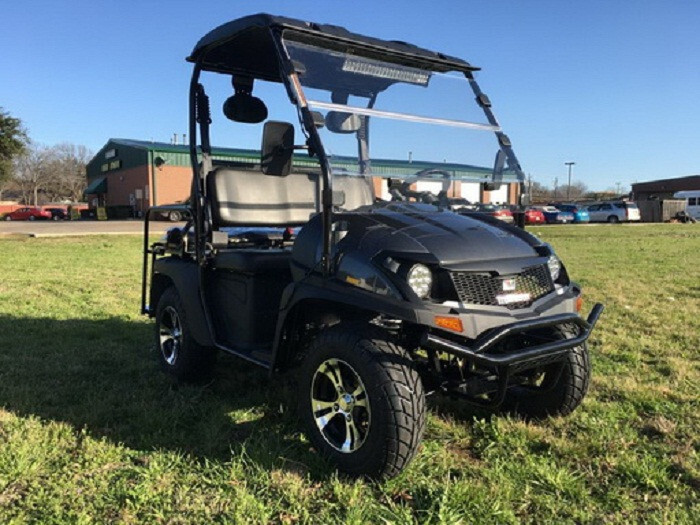
Affordable carts are not about shortcuts. They are about choosing the right compromises.
Most people focus on price first, then deal with the consequences later. A low sticker price ends up costing more with failed batteries and broken parts, and what looked cheap stops being cheap.
These days, most carts are not spending their time on golf courses. They are used on property, in neighborhoods, and at worksites where they get driven every day. That kind of regular use puts steady stress on the cart. That kind of use exposes weak parts quickly.
This is where the difference between gas and electric starts to matter.
Gas carts usually cost less to buy and are easier to keep running under daily use. Electric carts depend heavily on battery condition, and battery replacement is often the biggest expense.
However, neither option is automatically better. The right choice comes down to how the cart will be used and how often.
After years of handling golf carts, parts, and support calls, the patterns are hard to miss. This guide will help you avoid the expensive mistakes buyers make when trying to stay on budget.
First Decide How the Cart Will Be Used
Price alone is not a buying strategy.
A cart used a few times a week on flat ground has very different demands than one used daily on acreage or at a job site.
Passenger count, terrain, and run time all affect wear.
Smaller carts cost less to buy and maintain. Larger carts carry more people but put more stress on frames, brakes, and suspension. Cheap carts fail fastest when they are overloaded or pushed beyond their design.
So, have a clear use case to prevent bad consequences.
Why Budget Buyers Often Choose Gas Golf Carts
Gas golf carts remain common among buyers who want to limit upfront cost and avoid surprises later.
They refuel quickly and run consistently over longer distances. Plus, they do not rely on battery condition to perform.
Maintenance also follows basic engine service. Moreover, used gas carts are widely available, and many remain functional long after their first owner. That availability keeps prices lower and parts easy to find.
For folks who use a cart regularly or on uneven ground, gas power tends to hold up with fewer variables.
Noise and emissions are tradeoffs. But see for yourself, what’s more important to you? Longer range or less noise?
Electric Carts on a Budget
Electric carts are usually chosen for quiet operation and low day-to-day upkeep. When those two things matter more than range or refueling speed, electric can be a workable option on a budget.
The tradeoff is that almost all of the cost is tied to the batteries. A cart with healthy batteries can be inexpensive to run and easy to live with. A cart with tired batteries becomes expensive to fix.
That is where many budget buyers get caught off guard.
Electric carts tend to hold up best when use is light and predictable, like short trips, flat ground, and regular access to charging. In those conditions, they can stay reliable.
New Vs Used Is Where the Tradeoff Is
New carts remove uncertainty. There is no wear history and no guessing how the cart was treated. That certainty costs more, but it also limits surprises. For some buyers, that tradeoff is worth it.
Used carts lower the entry price and often offer better value, especially with gas models built for commercial use. Many of these carts are designed to run for years when maintained.
Age of the cart alone is rarely a problem with gas carts, but yes, risk lies in their condition. Therefore, inspection matters more than appearance. A clean body does not indicate mechanical health.
Engine behavior tells most of the story. Clean starts, steady idle, and predictable throttle response matter more than features. Fuel leaks, vibration, or hesitation are early warning signs.
Brakes, steering, tires, and suspension decide how stable a cart feels in daily use. Frame condition determines how long it will last. Cosmetic stuff like seats, lights, and accessories can always be added later, but structural and mechanical problems cannot be worked around.
However, used carts do offer more value when sold by knowledgeable sellers who disclose the condition honestly.
Similarly, for used electric carts, battery age and condition should be the first thing evaluated. More than mileage, appearance, and accessories. If the batteries are wrong, nothing else matters.
What Actually Matters in an Affordable Gas Cart
Appearance does not keep a cart running.
For gas golf carts, engine behavior tells most of the story. Starting, idle stability, and throttle response matter more than accessories.
Fuel leaks, vibration, or hesitation are warning signs. Similarly, brakes, steering, tires, and suspension determine whether a cart feels stable or worn out. Frame condition determines how long it will last.
Lights, seats, and accessories can be added later, but structural and mechanical problems cannot be ignored.
Need some suggestions for gas golf carts on sale? Check out these: Link
Street Use and Local Rules
Golf cart street use depends on local regulations. Requirements vary by city and county.
Most areas require lighting, reflectors, mirrors, and safety equipment. Some require registration or insurance. Many restrict road access entirely.
Rules should be checked before buying. Modifying a cart after purchase adds cost.
Choose the Source, Not Just the Cart
If you’re shopping for a cheap golf carts, here’s the right mindset: Buy from someone who’ll still pick up the phone after the sale.
Inexpensive purchases leave little margin for error, and where a cart is purchased from determines whether that margin becomes a problem.
Established sellers offer more than inventory. They offer institutional knowledge, pricing accountability, and post-sale support. These factors rarely appear in listings.
At TX Powersports, we understand our products and offer factory-direct pricing, fast shipping throughout the lower 48 states, lifetime technical support, and secure purchasing practices.
Also, we sell far more than just golf carts. We deal every day with ATVs, UTVs, scooters, go-karts, and other power sports vehicles. That means we see how people actually use this equipment, how they break it, and what they regret buying.
When someone buys the wrong cart, it is not good for them, and it is not good for us. That is why this guide is direct. No pretending every option is great. No pushing features that do not matter. Just clear tradeoffs, based on what holds up over time.
Key Takeaways Before You Buy
If you only remember a few things, remember these.
- Cheap electric carts are not cheap if batteries are near the end of their life.
- Gas carts usually cost less upfront and stay predictable to maintain, especially for regular use or uneven ground.
- Used carts can be a good value, but condition matters more than age or appearance.
- Seats, lights, and accessories can be added later. Engine health, brakes, frame, and suspension cannot.
- Decide how you will use the cart before deciding how much you want to spend.
- Street use depends on local rules. Check before buying, not after.
- Lastly, a good budget purchase is not about getting everything. It is about avoiding the things that cause ongoing costs and downtime. That is how affordability actually works.